

Most people assume starting a car is simple—and it mostly is. But do it wrong and you could damage the engine, drain the battery faster, or find yourself stranded with a car that refuses to cooperate.
This guide covers everything you need to know about how to start a car, whether it’s your first time behind the wheel or you’re troubleshooting a car that won’t start. You’ll find step-by-step instructions for automatic and manual transmission vehicles, push-button and key ignition systems, cold weather starts, and dead battery situations.
By the end, you’ll know exactly what to do before turning the key—and what to avoid.
What Do You Need Before Starting a Car?
Before you even think about the ignition, a few basics need to be in place:
- A valid driver’s license (or a learner’s permit with a licensed supervisor present)
- A registered and insured vehicle
- The ignition key or key fob
- Enough fuel in the tank
- A functional battery
These might seem obvious, but many starting problems trace back to one of these being overlooked—especially fuel and battery.
How to Start an Automatic Car?

Automatic transmission cars are the most common type on the road today. Here’s how to start one correctly.
Step 1: Sit in the Driver’s Seat
Adjust your position so you can comfortably reach the steering wheel, pedals, and gear shifter. Your back should rest against the seat, and your arms should have a slight bend when holding the wheel.
Step 2: Adjust the Seat and Mirrors
Before starting the engine, set up your driving position. Adjust the seat forward or backward so your feet reach the pedals without stretching. Then adjust the rearview and side mirrors so you have a clear view behind and beside the car.
Step 3: Press the Brake Pedal
Press the brake pedal firmly with your right foot and hold it down. This is a required safety step in most modern automatic vehicles—the car will not start unless the brake is depressed.
Step 4: Make Sure the Gear Is in Park
Look at the gear selector and confirm it is set to “P” (Park). Starting the engine in any other gear can cause the vehicle to lurch forward or backward unexpectedly.
Step 5: Start the Engine
Using a traditional ignition key: Insert the key into the ignition slot, usually located on the right side of the steering column. Turn it clockwise past the “On” position to “Start.” Hold it there for no more than two to three seconds. As soon as the engine starts, release the key.
Using a push-button start: Make sure your key fob is inside the vehicle. With your foot firmly on the brake pedal, press the start button once. The engine should fire up within seconds.
Step 6: Check the Dashboard Warning Lights
Once the engine is running, glance at the dashboard. Most warning lights—such as the check engine, oil pressure, and battery lights—will briefly illuminate and then turn off. This is normal. If any light stays on after a few seconds, it may indicate a problem worth investigating before driving.
Step 7: Shift Into Drive and Move Safely
When you’re ready to move, keep your foot on the brake, shift from “P” to “D” (Drive), check your mirrors and surroundings, then gently ease off the brake to move forward.
How to Start a Manual Transmission Car?
Manual cars require a bit more coordination. Here’s how to do it correctly.
Step 1: Press the Clutch Pedal
Push the clutch pedal all the way down with your left foot and hold it there. Like the brake in an automatic, the clutch must be pressed before the engine will start.
Step 2: Make Sure the Gear Is in Neutral
Move the gear stick to the neutral position—this is typically the middle of the gear pattern with no gear engaged. You’ll feel it sitting loosely between gears. Starting in neutral prevents the car from jolting forward when the engine fires.
Step 3: Turn the Ignition or Press the Start Button
With the clutch still depressed, insert and turn the key, or press the start button. The engine should start within a couple of seconds.
Step 4: Select First Gear
Once the engine is running, move the gear stick into first gear while keeping the clutch fully pressed.
Step 5: Release the Clutch Slowly
Slowly ease off the clutch pedal—this is the trickiest part for new drivers. Release it gradually until you feel the car start to pull forward. This is called the “biting point.”
Step 6: Apply the Accelerator and Start Moving
As the car begins to engage, gently press the accelerator while continuing to release the clutch. Too much throttle and you’ll rev the engine loudly. Too little and the engine may stall. Finding the balance takes practice.
How to Start a Car With a Push-Button Start?
Push-button ignitions, also known as keyless ignition systems, have become standard in most new vehicles.
How keyless ignition works: The key fob communicates wirelessly with the car’s ignition system. As long as the fob is inside the vehicle, the car recognizes it and allows the engine to start.
Brake/clutch pedal requirements: The same rules apply—press the brake (automatic) or clutch (manual) before pressing the start button.
What to do if the car does not detect the key fob: If the car shows a “no key detected” message, try holding the fob directly against the start button. Many vehicles have a backup reader built into or near the button to handle low battery situations in the fob.
Common push-button starting mistakes:
- Pressing the button without a foot on the brake (this only turns on accessories, not the engine)
- Forgetting the fob inside the house or bag
- Assuming the engine is off when it’s still running quietly in a hybrid vehicle
How to Start a Car With a Traditional Key?
Insert the key into the ignition. The ignition cylinder is usually on the right side of the steering column. Align the key’s ridges carefully before inserting it.
Turn the key to the correct position. Most ignition cylinders have three positions: Accessory (powers electronics), On (readies the system), and Start (cranks the engine). Turn to “Start.”
Wait for the engine to start. This usually takes one to two seconds. Do not hold the key in “Start” for more than five seconds—doing so can overheat the starter motor.
Release the key after the engine starts. The key will spring back automatically to the “On” position. Let it do so without forcing it.
How to Start a Car With a Dead Battery?
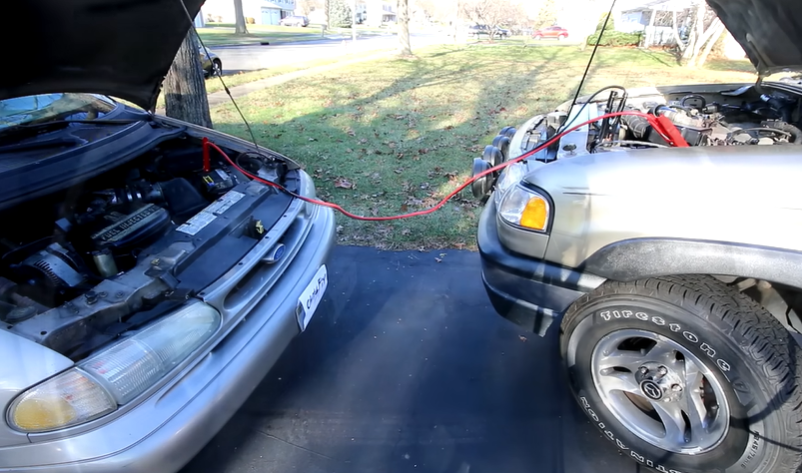
A dead battery is one of the most common reasons a car won’t start.
Signs of a dead battery:
- The engine cranks slowly or not at all
- Electrical systems (lights, radio) are weak or unresponsive
- You hear a series of rapid clicking sounds when turning the key
Using jumper cables: Connect the red (positive) cable to the dead battery’s positive terminal, then to the positive terminal on the working battery. Connect the black (negative) cable to the working battery’s negative terminal, then to an unpainted metal surface on the dead car (not the battery itself). Start the working car, wait two to three minutes, then try starting the dead car. Check Jumper Cable Price on Amazon
Using a portable jump starter: These compact devices eliminate the need for a second vehicle. Connect the clamps the same way as jumper cables, power on the jump starter, and then start your car.
When you should not attempt a jump-start: Avoid jump-starting if the battery is visibly cracked, leaking, or swollen. A damaged battery can be dangerous and should be replaced by a professional.
What to do after the engine starts: Drive the car for at least 20–30 minutes at highway speeds to allow the alternator to recharge the battery. Avoid turning the car off immediately after a jump-start.
How to Start a Car in Cold Weather?
Cold temperatures affect a car’s ability to start, particularly in regions that experience harsh winters.
Why cold weather makes starting harder: Cold thickens engine oil and reduces battery efficiency. According to AAA, a car battery loses roughly 35% of its strength at 32°F (0°C), and up to 60% at 0°F (-18°C).
Allowing the engine to start normally: Modern fuel-injected engines do not need to warm up for extended periods. A 30–60 second idle before driving is typically sufficient.
Diesel engine considerations: Diesel engines rely on compression heat to ignite fuel. In cold weather, diesel can gel and become difficult to combust. Many diesel vehicles have glow plugs—allow these to heat before cranking the engine.
Avoiding excessive cranking: If the engine doesn’t start within 10 seconds, stop and wait 30 seconds before trying again. Continuous cranking can overheat the starter motor and drain any remaining battery charge.
What to Do if Your Car Won’t Start?
If your car refuses to start, work through this checklist before calling for help.
Check the Battery
A weak or dead battery is the most common culprit. Look for dim dashboard lights or sluggish engine cranking.
Check the Fuel Level
It sounds obvious, but an empty tank is a surprisingly common reason cars fail to start. Check the fuel gauge.
Check the Gear Position
Automatic cars won’t start unless they’re in Park or Neutral. Manual cars require the clutch to be fully depressed.
Check the Brake or Clutch Pedal
Make sure you’re pressing the correct pedal firmly all the way down.
Listen for Unusual Sounds
- Rapid clicking: Usually a dead battery
- Single loud click: Could be a faulty starter motor
- No sound at all: Possible electrical failure or blown fuse
- Grinding noise: Starter gear may be worn
Check the Key or Key Fob
For key fobs, replace the battery if the car isn’t detecting the fob. For traditional keys, make sure the key is fully inserted and turning smoothly.
When to Call a Mechanic
If none of the above steps resolve the issue, the problem may involve the alternator, starter motor, fuel pump, or ignition system. These require professional diagnosis and repair.
Common Mistakes When Starting a Car
Even experienced drivers make these errors from time to time:
- Forgetting to press the brake or clutch. The car simply won’t start, and it can be confusing if you don’t realize why.
- Trying to start with the transmission in the wrong position. Always confirm the gear position before turning the key.
- Repeatedly cranking a non-starting engine. This drains the battery and can damage the starter motor. Wait 30 seconds between attempts.
- Ignoring dashboard warning lights. These lights exist for a reason. A warning that stays on after startup should not be dismissed.
Safety Tips Before Driving
Starting the engine is only the first step. Before moving the vehicle, run through this quick safety check:
- Check mirrors and surroundings. Adjust all mirrors before pulling out of a parking space.
- Confirm that the parking brake is released. Driving with the handbrake on causes unnecessary wear on the brake pads.
- Check dashboard warning lights. Confirm all lights have turned off.
- Make sure doors are closed. An open door indicator is easy to overlook.
- Look for pedestrians and obstacles. Especially important in parking lots and driveways.
- Start moving slowly. Ease into motion gently—there’s no need to accelerate hard from a standstill.
Frequently Asked Questions
How do you start a car for the first time?
Sit in the driver’s seat, adjust the seat and mirrors, press the brake pedal (automatic) or clutch pedal (manual), confirm the gear position, and turn the ignition key or press the start button.
Do you need to press the brake to start an automatic car?
Yes. Modern automatic vehicles require the brake pedal to be fully depressed before the engine will start. This is a built-in safety feature.
Do you need to press the clutch to start a manual car?
Yes. The clutch must be pressed all the way down before the ignition will engage in most manual transmission vehicles.
Why won’t my car start?
The most common causes are a dead or weak battery, insufficient fuel, incorrect gear position, a faulty starter motor, or a key fob with a dead battery. Work through each possibility before calling a mechanic.
How long should I crank my car?
Crank the engine for no more than five to ten seconds at a time. If it doesn’t start, wait 30 seconds before trying again. Repeated long cranking can damage the starter motor.
Can you start a car without a key?
Not legally or safely under normal circumstances. Some vehicles with keyless ignition can be started with a dead fob by holding the fob to the start button, but this is a backup function, not a workaround.
How do you start a car with a dead battery?
Use jumper cables connected to a working vehicle or a portable jump starter. Connect the positive cables first, then the negative, start the working car, wait a few minutes, and then try starting the dead vehicle.
Why does my car make a clicking sound but won’t start?
Rapid clicking typically indicates a dead or very weak battery. A single loud click may point to a faulty starter motor or solenoid. In both cases, the battery should be tested first.
Should you press the accelerator when starting a car?
No. Modern fuel-injected vehicles manage fuel delivery automatically. Pressing the accelerator during startup can actually flood the engine and make starting more difficult.
Final Thoughts
Starting a car is a straightforward process once you understand the steps. The key is knowing your vehicle type—automatic or manual—and following the correct sequence each time.
For new drivers, the most important habits to build early are checking the gear position, pressing the right pedal before starting, and paying attention to dashboard warning lights. For experienced drivers troubleshooting a difficult start, the checklist in this guide gives you a practical place to begin.
If your car consistently fails to start or shows persistent warning lights, don’t delay getting it checked by a qualified mechanic. Catching a small problem early is always cheaper than waiting until it becomes a major repair.