

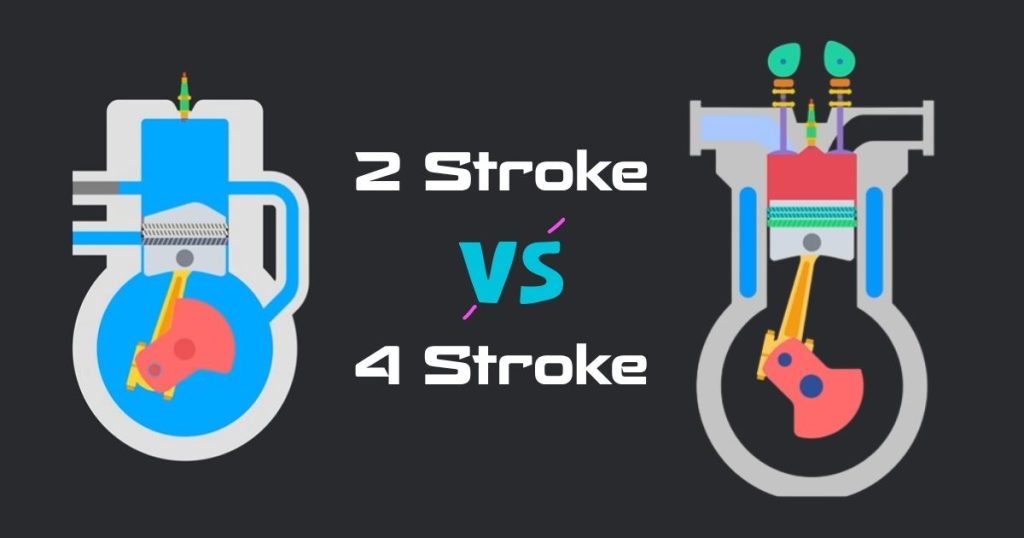
A 2-stroke engine completes a power cycle in one crankshaft revolution, making it lighter and more powerful relative to its size. A 4-stroke engine takes two revolutions per power cycle, delivering better fuel efficiency, lower emissions, and longer engine life. The right choice depends on your specific application, riding style, or performance needs.
Picking between a 2 stroke vs 4 stroke engine shouldn’t feel like decoding an engineering textbook. Yet for anyone buying a dirt bike, chainsaw, outboard motor, or small watercraft, this decision matters more than most people realize. Get it wrong, and you’re left with an engine that doesn’t match your expectations—or your lifestyle.
Both engine types share the same fundamental goal: converting fuel into mechanical energy. But they go about it in very different ways. Those differences ripple out into everything from how the engine sounds and smells to how much it weighs, how often it needs servicing, and how long it lasts.
This guide breaks down exactly how each engine works, where each one excels, and which is better suited for different applications. By the end, you’ll know precisely which engine type makes sense for your situation.
What Is a 2-Stroke Engine?
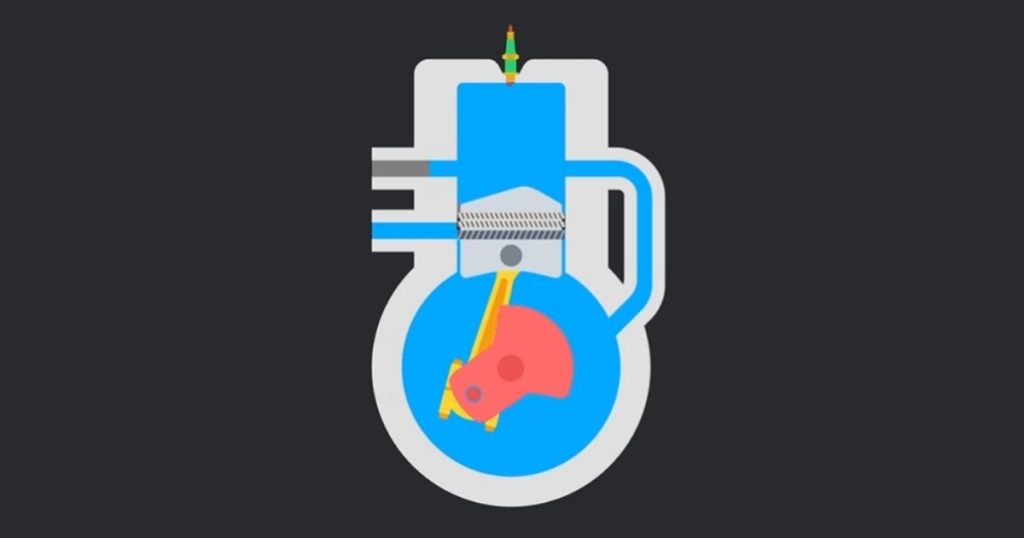
A 2-stroke engine is an internal combustion engine that completes a full power cycle—intake, compression, combustion, and exhaust—in just two piston strokes and a single crankshaft revolution.
Because the power and exhaust functions overlap within the same stroke, the engine fires on every revolution. This design eliminates the need for dedicated intake and exhaust valves, simplifying the overall construction considerably. Lubrication typically comes from oil mixed directly into the fuel, which means there’s no separate oil reservoir or complex lubrication system.
Common applications of 2-stroke engines include:
- Dirt bikes and motocross bikes
- Chainsaws and leaf blowers
- Outboard boat motors
- Snowmobiles
- Personal watercraft (jet skis)
- Mopeds and small scooters
STA-BIL Full Synthetic 2-Cycle Oil- Check Price on Amazon
What Is a 4-Stroke Engine?
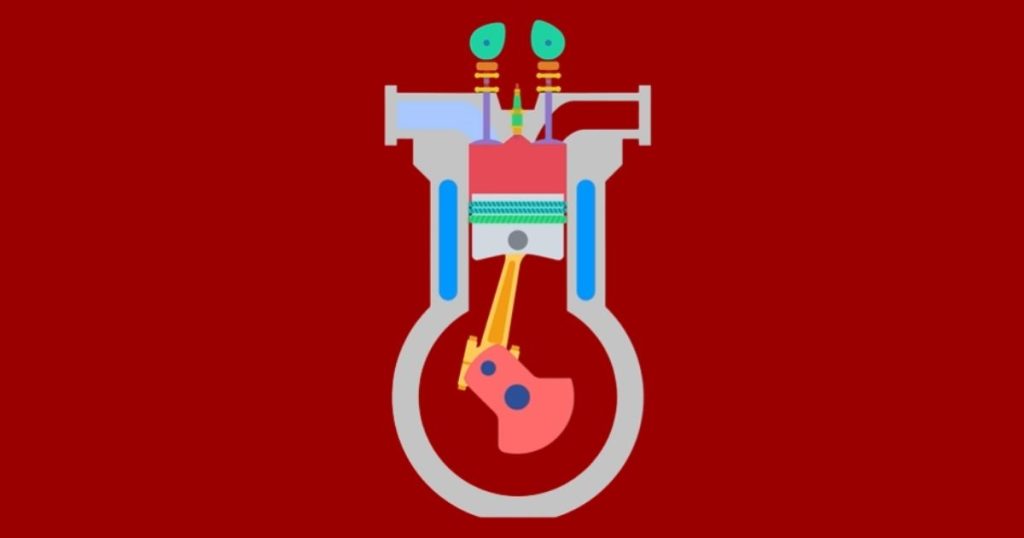
A 4-stroke engine completes its power cycle across four distinct piston strokes and two full crankshaft revolutions. The four stages are:
- Intake — The piston moves down, drawing an air-fuel mixture into the cylinder
- Compression — The piston moves up, compressing the mixture
- Power — The compressed mixture ignites, forcing the piston down
- Exhaust — The piston moves back up, pushing burned gases out of the cylinder
This more deliberate cycle allows for a separate lubrication system, dedicated valvetrain components, and more precise control over combustion. The result is a smoother, more efficient, and typically longer-lasting engine.
STP Premium Small Engine 4 Cycle Oil- Check Price on Amazon
Common applications of 4-stroke engines include:
- Cars and trucks
- Motorcycles (road bikes, adventure bikes, cruisers)
- Lawn mowers
- Generators
- Agricultural machinery
15 Common Car Engine Problems & Best Solutions 2026
2 Stroke vs 4 Stroke: How Do They Work?
How Does a 2-Stroke Engine Cycle Work?
In a 2-stroke engine, the intake and compression happen on the upstroke, while combustion and exhaust happen on the downstroke. As the piston moves up, it compresses the air-fuel mixture in the combustion chamber while simultaneously drawing fresh mixture into the crankcase below. When the spark plug fires, the burning gases force the piston down, uncovering exhaust and transfer ports that allow spent gases to escape and fresh mixture to enter simultaneously.
This overlap is efficient in terms of power output per revolution, but it also means some fresh fuel escapes with the exhaust—a key reason 2-stroke engines tend to be less fuel-efficient and produce more emissions.
How Does a 4-Stroke Engine Cycle Work?
A 4-stroke engine separates each function into its own dedicated stroke. There’s no overlap between intake and exhaust, and combustion never interferes with the gas exchange process. This precision comes at a cost: the engine only produces a power stroke every two crankshaft revolutions, making it less aggressive in feel but more refined in operation.
2 Stroke vs 4 Stroke: Key Differences
| Feature | 2-Stroke | 4-Stroke |
|---|---|---|
| Engine cycle | 2 strokes | 4 strokes |
| Power stroke | Every revolution | Every two revolutions |
| Weight | Generally lighter | Generally heavier |
| Power-to-weight ratio | Higher | Lower |
| Fuel efficiency | Generally lower | Generally higher |
| Emissions | Higher | Lower |
| Maintenance | Simpler but more frequent | More complex, less frequent |
| Engine lifespan | Generally shorter | Generally longer |
| Lubrication | Mixed/injected oil | Separate lubrication system |
2 Stroke vs 4 Stroke: Performance Comparison
Power and Acceleration
A 2-stroke engine delivers a sharp, aggressive power hit because it fires on every revolution. That burst of power translates into explosive acceleration, particularly in the mid-to-upper RPM range. A 4-stroke, by contrast, builds power more progressively across the rev range.
Torque
4-stroke engines produce stronger low-end torque. That’s the pulling power you feel at lower RPMs—useful for towing, climbing hills, or navigating technical terrain without constantly revving the engine. 2-strokes tend to have a narrower, more peaky torque band.
Power-to-Weight Ratio
This is where 2-stroke engines shine. Because the design requires fewer components—no camshafts, rocker arms, or separate oil system—2-stroke engines weigh significantly less for their displacement. A 125cc 2-stroke, for example, can produce power comparable to a much larger 4-stroke engine.
Throttle Response
2-stroke engines are typically more responsive to throttle input, which makes them exciting to ride but harder to control at the limit. 4-stroke engines offer smoother, more predictable throttle response—a characteristic many riders and operators prefer for technical or endurance applications.
Top Speed
For a given displacement, a 2-stroke engine can reach higher top speeds due to its high-revving nature and superior power-to-weight ratio. However, modern 4-stroke engines—particularly in motorsport—have closed this gap considerably.
2 Stroke vs 4 Stroke: Fuel Efficiency
The structural difference between these two engines directly explains the fuel efficiency gap. Because a 2-stroke engine’s exhaust and intake ports open simultaneously during scavenging, a portion of the unburned air-fuel mixture escapes before combustion. This “short-circuiting” wastes fuel and contributes to higher hydrocarbon emissions.
A 4-stroke engine separates each stage cleanly. The intake valve closes before compression begins, ensuring virtually all the fuel drawn in gets burned. Combined with a dedicated lubrication system that doesn’t contaminate combustion, 4-stroke engines extract considerably more energy from the same volume of fuel.
Real-world fuel consumption also depends on load, riding style, engine tuning, and altitude—but as a baseline rule, 4-stroke engines are more economical to run over time.
Car Engine Cooling System Problems: Symptoms, Causes, and Solutions
2 Stroke vs 4 Stroke: Maintenance and Reliability
2-Stroke Maintenance
2-stroke engines are mechanically simpler, but they work hard. Key maintenance tasks include:
- Oil and fuel mixing — Incorrect ratios damage the engine quickly
- Spark plug replacement — More frequent than 4-stroke equivalents due to higher combustion temperatures
- Piston and ring replacement — Higher wear rates mean more frequent rebuilds, especially in performance applications
- Reed valve inspection — Worn reed valves reduce power and efficiency
4-Stroke Maintenance
4-stroke servicing is more involved but generally less frequent:
- Oil changes — Regular oil and filter replacement is essential
- Valve adjustment — Clearances need periodic checking and adjustment
- Timing chain or belt service — Critical to engine longevity
- Air filter and coolant maintenance — More systems mean more items to monitor
The complexity of 4-stroke service typically means higher labor costs at a workshop, though the intervals between major services tend to be longer.
2 Stroke vs 4 Stroke: Weight and Engine Design
The mechanical simplicity of a 2-stroke engine has a direct impact on weight. Without a valvetrain, separate oil system, or complex timing components, a 2-stroke engine can be substantially lighter than a comparable 4-stroke unit. In applications like dirt bikes, chainsaws, and personal watercraft, that weight difference affects handling, portability, and performance in meaningful ways.
4-stroke engines carry more components—camshafts, valves, rocker arms, timing chains, oil pumps, and separate oil reservoirs all add mass. That weight comes with benefits (smoother operation, better fuel economy, longer life), but it’s a trade-off engineers and end users must weigh against the application’s demands.
2 Stroke vs 4 Stroke: Noise and Emissions
2-stroke engines are louder and produce significantly more exhaust emissions than their 4-stroke counterparts. The simultaneous exhaust-intake scavenging process releases unburned hydrocarbons, and the oil-fuel mixture produces visible blue smoke under hard use. This is why 2-stroke engines have faced increasing regulatory scrutiny.
Many regions now restrict or ban 2-stroke engines in certain applications—particularly marine environments, urban areas, and consumer power equipment. The California Air Resources Board (CARB) and the European Union have both implemented stricter emissions standards that have effectively phased 2-stroke engines out of many markets.
4-stroke engines run cleaner, quieter, and are compatible with modern catalytic converter technology, making them the default choice for emissions-compliant applications.
Advantages and Disadvantages of 2-Stroke Engines
Advantages
- Lightweight and compact design
- High power-to-weight ratio
- Strong, aggressive acceleration
- Simpler engine construction
- Fewer moving parts
Disadvantages
- Higher fuel consumption
- Greater emissions output
- More frequent maintenance in demanding use cases
- Shorter engine lifespan in performance applications
- Increasingly restricted by emissions regulations
How to Clean Engine Bay: Step-by-Step Guide
Advantages and Disadvantages of 4-Stroke Engines
Advantages
- Superior fuel economy
- Lower emissions
- Strong low-end torque
- Longer engine life in most applications
- Smoother power delivery
Disadvantages
- Heavier than equivalent 2-stroke engines
- More complex internal construction
- Higher servicing costs
- More components that can wear or fail
2 Stroke vs 4 Stroke Dirt Bike: Which Is Better?
Dirt bike riders have debated this for decades—and the honest answer depends on what and how you ride.
2-stroke dirt bikes are lighter, more agile, and deliver a raw, high-revving power delivery that experienced riders often describe as exhilarating. They’re popular in motocross racing because their power-to-weight advantage allows for explosive corner exits and easier maneuvering in the air. Maintenance is more frequent, but rebuilds are relatively straightforward with basic mechanical knowledge.
4-stroke dirt bikes offer broader, more accessible power across the RPM range. That predictable delivery makes them better suited to trail riding, enduro, and beginner riders still developing throttle control. The added weight can work against riders in tight, technical terrain, but on longer trails and open courses, the smooth power and better fuel range are genuine advantages.
Recommended by application:
- Motocross racing — 2-stroke for experienced riders; 4-stroke for those who prefer predictability
- Trail riding — 4-stroke
- Beginners — 4-stroke, for smoother, more manageable power
- Experienced riders seeking raw performance — 2-stroke
How Often to Change Engine Air Filter? Best Guide
2 Stroke vs 4 Stroke: Which Is Better?
There is no universal winner. The better engine depends entirely on your application, priorities, and budget.
Choose a 2-Stroke If You Want:
- Maximum power from a lightweight package
- Quick, explosive acceleration
- A simpler engine to rebuild yourself
- Performance in motorsport or off-road racing
Choose a 4-Stroke If You Want:
- Better fuel economy over time
- Smoother, more consistent power delivery
- Stronger low-end torque for technical terrain or heavy loads
- Lower emissions and regulatory compliance
- Longer service intervals and engine longevity
What Is Engine Braking? How it Works, Benefits and Important Tips
Frequently Asked Questions
Is a 2-stroke engine faster than a 4-stroke?
In terms of acceleration and high-RPM performance, a 2-stroke engine is often faster for its size because it fires on every crankshaft revolution. However, modern 4-stroke engines—particularly in larger displacements—can match or exceed 2-stroke top speeds in many applications.
Which is more powerful, a 2-stroke or 4-stroke engine?
A 2-stroke engine produces more power relative to its displacement and weight because it generates a power stroke with every revolution. However, 4-stroke engines at larger displacements produce greater absolute power, which is why most high-performance cars and motorcycles use 4-stroke configurations.
Which engine lasts longer?
4-stroke engines generally last longer. The separate lubrication system, more controlled combustion cycle, and lower thermal stress combine to reduce internal wear over time. 2-stroke engines, particularly in performance applications, require more frequent rebuilds.
Which engine is more fuel-efficient?
4-stroke engines are more fuel-efficient. Because all intake fuel is combusted rather than partially expelled through the exhaust port, 4-stroke engines extract more energy per unit of fuel.
Which engine is easier to maintain?
A 2-stroke engine is mechanically simpler and easier to work on for basic tasks like piston replacement. However, it requires more frequent attention. A 4-stroke engine is more complex to service, but maintenance intervals are typically longer.
Are 2-stroke engines better for dirt bikes?
It depends on the rider and riding style. Experienced motocross riders often prefer 2-stroke dirt bikes for their power-to-weight advantage. Beginners and trail riders generally benefit more from the smoother, more forgiving power delivery of a 4-stroke dirt bike.
Is a 2-stroke or 4-stroke better for beginners?
A 4-stroke engine is better for beginners. The power delivery is smoother and more predictable, which makes throttle control easier to learn and reduces the risk of being caught off guard by sudden power surges.
Why are 2-stroke engines lighter?
2-stroke engines are lighter because they have fewer components. Without a dedicated valvetrain (camshafts, valves, rocker arms) or a separate oil circulation system, the overall engine mass is significantly reduced.
Do 2-stroke engines use more fuel?
Yes. 2-stroke engines consume more fuel per kilometer or hour of operation because a portion of the air-fuel mixture escapes through the exhaust port before combustion—a process called scavenging loss. The need to mix oil with fuel also adds to operating costs.
Why are 2-stroke engines being replaced by 4-stroke engines?
Tightening emissions regulations in most major markets are the primary driver. 2-stroke engines emit significantly higher levels of unburned hydrocarbons and particulate matter. Regulatory bodies like the EPA, CARB, and the EU have progressively restricted 2-stroke engine use in consumer equipment, marine applications, and motorsport, accelerating the shift toward cleaner 4-stroke alternatives.
The Bottom Line on 2 Stroke vs 4 Stroke Engines
Both engine types have earned their place—and both remain relevant today, even as regulations continue to reshape the landscape. A 2-stroke engine delivers unmatched power-to-weight performance and mechanical simplicity, making it the right tool for specific high-performance and lightweight applications. A 4-stroke engine offers better efficiency, lower emissions, smoother operation, and longer service life, making it the practical choice for most everyday and road-going applications.
The key takeaway: match the engine to the job. A 2-stroke shines in motocross, lightweight power tools, and situations where power-to-weight ratio is the priority. A 4-stroke wins when reliability, fuel economy, emissions compliance, and long-term durability matter most.
If you’re still deciding, consider how and where you’ll use the engine most—that single factor will tell you more than any specification sheet.