
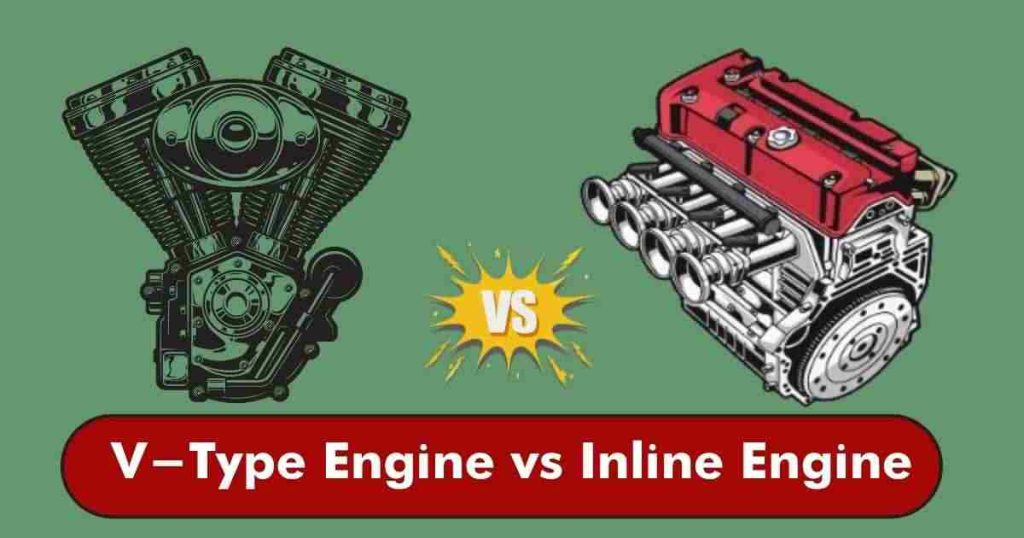
When shopping for a new vehicle or simply geeking out over specs, you will likely encounter terms like “V6,” “V8,” “Inline-4,” or “Straight-6.” While most people focus on horsepower and torque figures, the physical layout of the engine—how the cylinders are arranged—plays a massive role in how the car drives, sounds, and performs.
The debate usually centers on two main configurations. Choosing between a V-Type engine vs Inline engine setup involves understanding trade-offs regarding space, vibration, cost, and complexity. Manufacturers don’t just pick a layout at random; they choose the specific architecture that best fits the vehicle’s purpose.
Whether you are looking for a reliable daily commuter, a smooth luxury cruiser, or a high-performance sports car, knowing what is under the hood matters. This guide breaks down the mechanics, benefits, and drawbacks of these two dominant engine styles.
Understanding the Inline Engine
The Inline engine (also known as a “Straight” engine) is the most common configuration found in modern passenger vehicles. As the name suggests, the cylinders are arranged in a single straight line, one behind the other, along the crankshaft.
If you pop the hood of a Toyota Corolla or a Honda Civic, you are likely looking at an Inline-4. While 4-cylinder versions are the industry standard for economy cars, the Inline-6 has a legendary status in the automotive world, famously used by manufacturers like BMW and classic Jeeps.
Because all the cylinders sit in a row, these engines are longer than their counterparts. However, they are also narrower, which leaves plenty of room on the sides of the engine bay for turbochargers, suspension components, or battery access.
Understanding the V-Type Engine
The V-Type engine splits the cylinders into two separate banks, angled away from each other to form a “V” shape when viewed from the front. These banks connect to a common crankshaft at the base.
The angle of the V can vary, but 60 degrees and 90 degrees are the most common. You will typically see this configuration in V6, V8, V10, and V12 engines. This layout allows engineers to pack more cylinders into a smaller, more condensed space.
If you look at the engine bay of a Ford Mustang or a Chevrolet Silverado, you will notice the engine block looks shorter and wider compared to a straight engine. This compact shape allows manufacturers to fit larger displacement engines into smaller engine bays.
V-Type Engine vs Inline: The Key Differences
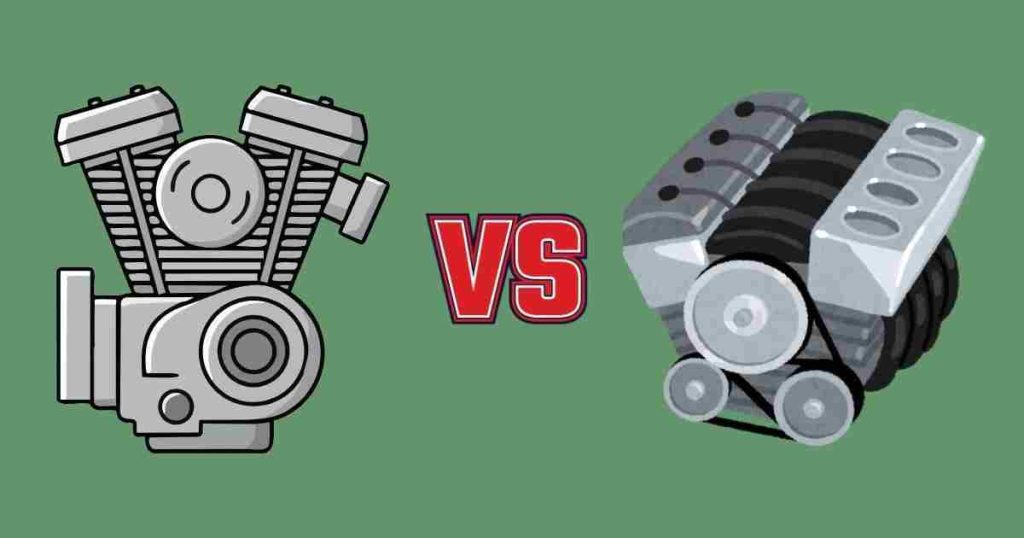
To truly understand which is superior for your needs, we have to look at the specific engineering differences. When comparing the V-Type engine vs Inline engine configuration, five major factors come into play.
1. Configuration and Gravity
The Inline engine is tall and long. Because it stands upright, it can result in a higher center of gravity, which might affect handling in extreme cornering scenarios. The V-Type is wider but generally sits lower in the chassis. This lower profile helps keep the center of gravity down, improving the car’s aerodynamics and stability.
2. Primary and Secondary Balance
This is where the Inline-6 shines. An Inline-6 engine has perfect primary and secondary balance because the movement of the pistons naturally cancels out vibrations. It doesn’t need heavy balancing shafts to run smoothly.
In contrast, V-Type engines (especially V6s) are inherently unbalanced due to the odd firing order and split banks. Manufacturers must add counterweights and balance shafts to smooth out the vibrations, which adds weight and rotational mass.
3. Size and Dimensions
The “packaging” of an engine dictates the design of the car.
- Inline: Its length makes it difficult to fit transversely (sideways) in front-wheel-drive cars if it has more than four cylinders. This is why you rarely see Inline-6 engines in front-wheel-drive sedans.
- V-Type: The split bank makes the engine block significantly shorter. A V6 can often fit in the same space as an Inline-4, allowing carmakers to offer a more powerful engine option without redesigning the entire chassis.
4. Complexity and Maintenance
An Inline engine has one cylinder head, one exhaust manifold, and one set of camshafts. It is a simple design that is easy to manufacture and easy for mechanics to access.
A V-Type engine doubles almost everything. It has two cylinder heads, two exhaust manifolds, and often double the camshafts (for DOHC engines). This complexity makes the V-Type engine more expensive to build and generally more labor-intensive to repair.
5. Cost
Due to the simplicity mentioned above, Inline engines are generally cheaper to produce. The complex casting and extra components required for the V-Type Engine vs Inline architecture make the V-Type a more premium option, usually reflected in the vehicle’s final sticker price.
Advantages and Disadvantages of Inline Engines
The straight engine has been around since the dawn of the automobile for good reason, but it isn’t perfect.
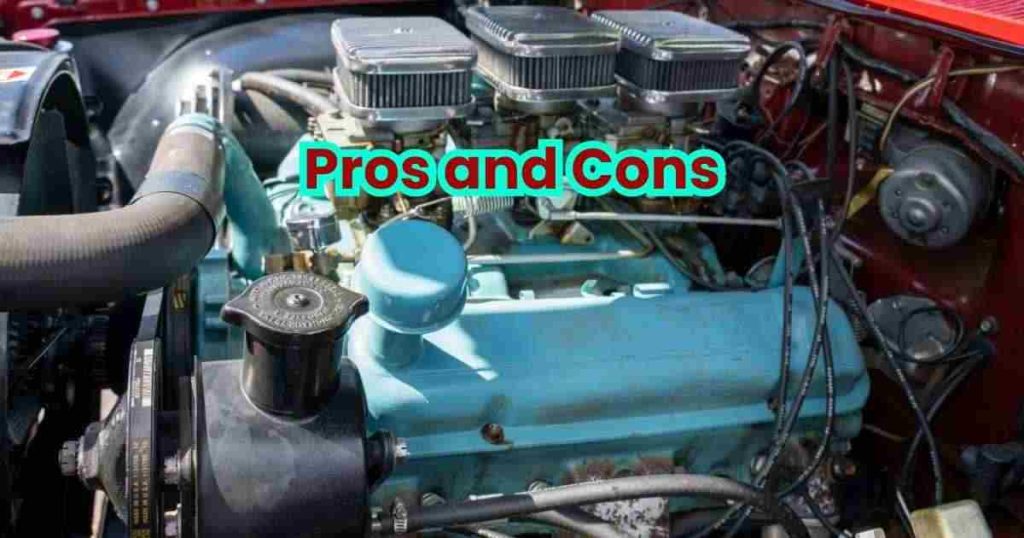
The Pros
- Smoothness: The Inline-6 is renowned for being “buttery smooth” due to natural balancing.
- Simplicity: Fewer moving parts mean fewer things can break.
- Serviceability: Spark plugs, cylinder heads, and other components are usually right on top and easy to reach.
- Torque: They often produce excellent low-end torque.
The Cons
- Length: An Inline-6 is very long, making it hard to fit in compact engine bays.
- Height: The tall profile limits how low the hood line can be, affecting aerodynamics.
- Rigidity: Longer crankshafts and blocks can suffer from torsional flexing under high power.
Advantages and Disadvantages of V-Type Engines
The V-engine is the muscle of the automotive world, offering high performance in a small package.
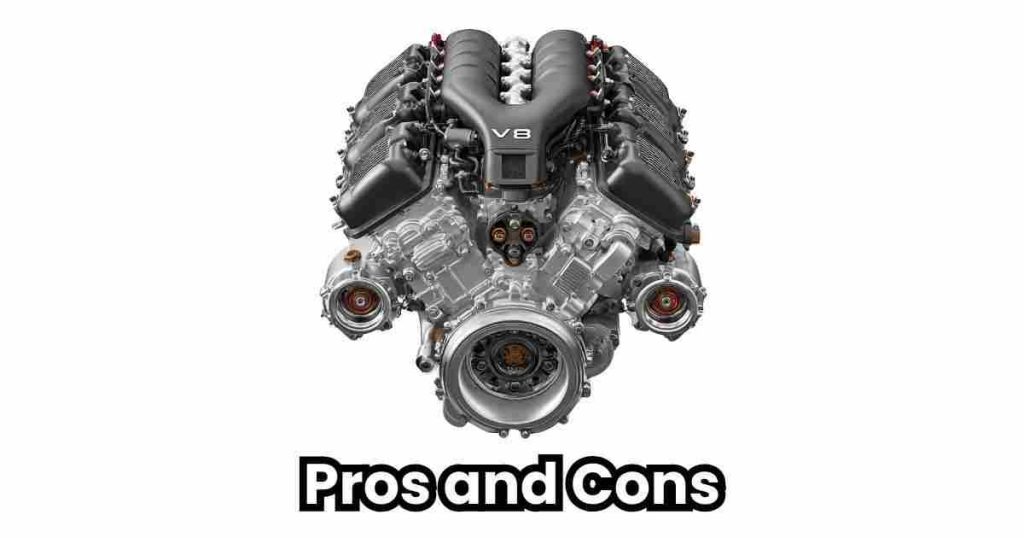
The Pros
- Compact Size: You can fit a large displacement engine (like a V8) into a relatively small car.
- Rigidity: The compact block is stiffer and more rigid, which is great for high-horsepower applications.
- Versatility: The shorter length allows for front-wheel, rear-wheel, and all-wheel drive configurations easily.
The Cons
- Vibration: Requires extra engineering (balance shafts) to run smoothly.
- Maintenance Difficulty: Reaching spark plugs or gaskets on the rear bank of a transverse V6 can be a mechanic’s nightmare.
- Weight: The extra components add to the overall weight of the vehicle.
Applications: Where You’ll See Them
The choice of V-Type Engine vs Inline usually depends on the vehicle’s intended market.
Inline Engines are the kings of practicality and specific performance niches. The Inline-4 is the global standard for economy cars, crossovers, and hybrid powertrains due to its efficiency. Meanwhile, the Inline-6 has seen a resurgence with luxury brands like Mercedes-Benz and Land Rover returning to the layout for its unmatched smoothness.
V-Type Engines dominate the performance and utility sectors. You will find V6 engines in everything from family minivans to mid-sized SUVs because they offer a good balance of power and size. The V8 remains the go-to for full-size pickup trucks and American muscle cars, while V10 and V12 engines are reserved for supercars and ultra-luxury sedans where space is tight but power demand is high.
Which Engine Is Right for You?
When evaluating the V-Type Engine vs Inline debate, there is no single “best” answer—only the right answer for your specific needs.
If you value mechanical simplicity, ease of maintenance, and incredible smoothness, a vehicle with an Inline engine (particularly a straight-six) is a fantastic choice. However, if you need maximum power in a compact package, or if you are looking for a heavy-duty truck, the rigid and compact nature of the V-Type engine is likely the better path.
Ultimately, both configurations have proven their worth over a century of automotive history. The best way to decide is to get behind the wheel, feel the throttle response, and listen to the engine note for yourself.
FAQs for V-Type Engine vs Inline Engine
Q: Which engine configuration is better for fuel efficiency?
A: It is generally believed that inline engines have better fuel efficiency due to their simpler design and fewer moving parts. However, advancements in technology have made V-type engines more efficient in recent years.
Q: Is one engine configuration easier to maintain than the other?
A: The maintenance requirements for both configurations are similar, but it may be slightly easier to work on an inline engine due to its straight layout.
Q: Are there any significant differences in performance between the two engine types?
A: Yes, there can be notable differences depending on the specific make and model of the car. In general, V-type engines tend to have better torque and horsepower, making them ideal for larger vehicles or sports cars.
Inline engines may provide better fuel efficiency and smoother operation at lower speeds, making them suitable for everyday driving in smaller vehicles.
Q: Are there any other advantages or disadvantages of each engine configuration?
A: Yes, there are a few other factors to consider when comparing V-type and inline engines. V-type engines tend to be more compact and can fit into tighter spaces within the engine bay, making them easier to service and repair.
On the other hand, inline engines have fewer moving parts, which may result in lower maintenance costs over time.
Final Words
Ultimately, the best engine configuration for your vehicle will depend on various factors such as cost, performance, and personal preference. Both V-type and inline engines have their own unique advantages and disadvantages, so it is important to carefully consider your specific needs before making a decision.
We hope this guide has provided you with valuable information to help you better understand these two types of engines and make an informed choice for your next vehicle.