

Welcome to our guide on car engine cooling system problems! Whether you’re a seasoned car owner or a new driver, it’s important to understand the ins and outs of your vehicle’s cooling system. This crucial component is responsible for keeping your engine at a safe operating temperature, preventing overheating and potential damage.
In this guide, we’ll discuss common symptoms of cooling system issues, their possible causes, and how to diagnose and fix them. By understanding these problems and taking proper care of your car, you can save yourself from expensive repairs and ensure that your engine runs smoothly for years to come.
So let’s dive in and learn about car engine cooling system problems together! So buckle up and get ready to become an expert in keeping your car’s engine cool and running smoothly.
How a Car Engine Cooling System Works?
Before diagnosing problems, it helps to understand what is happening under the hood. The cooling system is a closed loop designed to circulate a liquid coolant (often called antifreeze) through the engine block to absorb heat and then transport that heat away to be dissipated.
The heart of this system is the water pump, which pushes the coolant through the engine. As the fluid travels through the engine’s passages, it absorbs the intense heat generated by combustion. The hot coolant then flows into the radiator, typically located at the front of the vehicle. Here, passing air (aided by the cooling fan) moves across the radiator’s fins, cooling the liquid inside.
The thermostat acts as a gatekeeper, regulating flow based on temperature. It stays closed when the engine is cold to help it warm up quickly and opens once operating temperature is reached. The system relies on radiator hoses to transport the fluid and a coolant reservoir to handle the expansion of hot liquid. When all these components work in harmony, your engine stays at the perfect operating temperature.
Common Car Engine Cooling System Problems
Because the system relies on so many interconnected parts, failure in one area often triggers issues elsewhere. Here are the most frequent problems drivers encounter.
Engine Overheating
Overheating is the ultimate symptom of cooling system failure. You might notice the dashboard gauge hitting “H” or a warning light illuminating. This usually happens because the heat is being generated faster than the system can remove it. Common causes range from low coolant levels to a complete failure of the water pump or fan.
Coolant Leaks
Leaks are the most frequent culprit behind system failure. They can be external, where you see bright green, orange, or pink fluid dripping onto your driveway, or internal, which is much more serious.
An external leak often comes from a cracked hose or a loose clamp. An internal leak usually points to a blown head gasket, allowing coolant to mix with engine oil or burn up in the combustion chamber.
Low Coolant Level
If your coolant level is constantly dropping, it has to be going somewhere. While leaks are the primary cause, coolant can sometimes burn off slowly inside the engine if there is a minor internal breach. Low coolant introduces air into the system and prevents effective heat transfer, causing the engine temperature to spike rapidly.
Radiator Problems
The radiator sits at the front of the car, exposing it to road debris. It can become clogged internally with sediment and rust, or externally with bugs and dirt. Damaged or bent radiator fins block airflow, reducing the cooling capacity. Over time, plastic radiator tanks can also crack from heat stress, and metal cores can succumb to corrosion.
Faulty Thermostat
Thermostats are simple valves, but they fail in two ways. If a thermostat sticks open, the engine never reaches proper operating temperature, causing poor fuel economy and performance. If it sticks closed, hot coolant is trapped in the engine block with nowhere to go, leading to rapid and severe overheating.
Water Pump Failure
The water pump is a mechanical part that eventually wears out. The internal impeller can corrode, or the bearing holding the shaft can fail. Warning signs include a high-pitched whining noise from the front of the engine or coolant leaking from the pump’s “weep hole.” If the impeller shears off, coolant circulation stops instantly.
Cooling Fan Malfunction
Your car needs airflow to cool the radiator, especially when you are stopped in traffic. If the cooling fan fails due to a bad motor, blown fuse, or faulty temperature sensor, your car will likely overheat at stoplights but cool down once you start moving on the highway.
Air Trapped in the Cooling System
The cooling system is designed to be hydraulic—meaning it should be filled entirely with liquid. Air pockets create “hot spots” because air does not absorb heat like water does. This often happens after a repair if the system wasn’t properly “bled” or refilled.
Solutions to Car Engine Cooling System Problems
Diagnosing the issue is half the battle; fixing it ensures your car stays on the road.
Fixing Engine Overheating
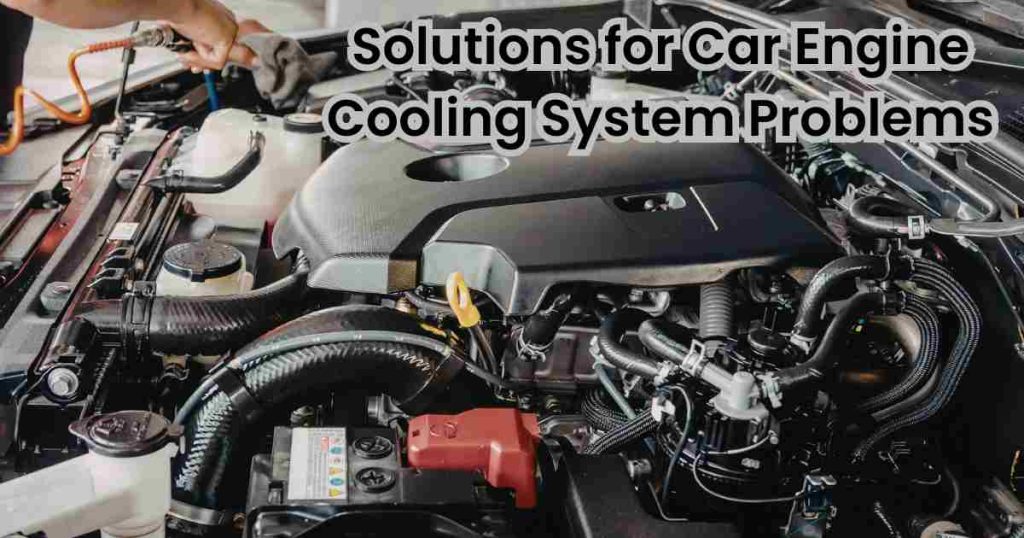
If your car overheats while driving, pull over immediately and turn off the engine. Do not open the radiator cap while it is hot—the pressure can spray boiling liquid on you. The immediate solution is to let it cool down. The long-term fix depends on the root cause, whether that means adding coolant or towing it to a shop for a new pump.
Repairing Coolant Leaks
Simple external leaks are often DIY-friendly. A burst radiator hose is an easy replacement: drain the coolant, remove the clamps, and swap the hose. Radiator cracks typically require replacing the entire radiator unit, as patch kits are often temporary. Head gasket repairs (internal leaks) are complex, labor-intensive jobs that usually require a professional mechanic.
Maintaining Proper Coolant Level
To fix low coolant, you need to top off the reservoir. However, never just use plain water unless it is an emergency. You must use the correct coolant type specified in your owner’s manual, mixed with distilled water (usually a 50/50 ratio), to prevent corrosion and freezing.
Valvoline Multi-Vehicle Concentrate Antifreeze Coolant- Check Price on Amazon
Radiator Cleaning and Maintenance
If your radiator is clogged with internal rust or scale, a radiator flush can help. This involves running a chemical cleaner through the system to break down deposits before refilling with fresh fluid. Externally, you can use a garden hose (low pressure) to gently wash away bugs and dirt from the fins.
Replacing a Faulty Thermostat
Replacing a thermostat is often an inexpensive and straightforward repair. It is located where the upper radiator hose meets the engine. Because it is a cheap part that dictates engine safety, many mechanics recommend replacing it whenever you perform other cooling system work, like replacing a water pump.
Water Pump Replacement
Water pumps are often driven by the timing belt. If your car requires a timing belt change, it is standard practice to replace the water pump at the same time as preventive maintenance. If the pump fails independently, it must be swapped out immediately to prevent catastrophic overheating.
Cooling Fan Repair
If the fan isn’t spinning, check your fuse box first. A blown fuse or bad relay is a cheap fix. If the electrical components are fine, the fan motor itself may have burned out, requiring a replacement of the fan assembly.
Bleeding Air from the Cooling System
To remove air pockets, you need to “burp” the system. This involves running the engine with the radiator cap off (starting from cold) and the heater turned on full blast. As the car warms up, bubbles will escape through the radiator neck, and you simply add more coolant as the level drops.
Preventive Maintenance Tips
You can avoid most of these headaches with a proactive routine.
- Inspect Regularly: Check the coolant reservoir level every time you get an oil change.
- Flush on Schedule: Old coolant loses its anti-corrosive properties. Flush the system every 30,000 to 50,000 miles, or as recommended by your manufacturer.
- Watch the Gauge: Make it a habit to glance at your temperature gauge while driving. Knowing what “normal” looks like helps you spot trouble early.
- Check Belts and Hoses: Squeeze rubber hoses to check for softness or cracks, and inspect drive belts for fraying.
- Use Quality Fluid: Always stick to the coolant color and type recommended by the manufacturer. Mixing incompatible coolants can turn the fluid into a gel that clogs the engine.
Warning Signs You Should Not Ignore
Your car will usually tell you before it gives up the ghost. Pay attention to the temperature gauge rising higher than usual, even if it hasn’t hit the red zone yet. If you see steam rising from the engine bay, stop immediately.
A sweet, maple-syrup smell inside or outside the cabin is a telltale sign of burning or leaking antifreeze. Finally, never ignore a “Low Coolant” warning light on your dashboard—it is the earliest warning you will get.
When to See a Professional Mechanic
While topping off coolant is easy, some jobs require expertise. If you suspect an internal leak like a head gasket failure (indicated by white smoke from the exhaust or “milky” oil), seek professional help immediately.
Persistent overheating that doesn’t go away after simple fixes, or repeated coolant loss with no visible leak, suggests a deeper issue that requires pressure testing and professional diagnostic tools.
FAQs for Car Engine Cooling System Problems and Solutions
Q: What are some common symptoms of cooling system issues in a car?
A: Some common symptoms include overheating or fluctuating temperature gauge, low coolant levels, strange noises coming from the engine, and visible leaks.
Q: What could be causing these cooling system problems?
A: There can be various causes such as a faulty thermostat, radiator issues, worn out water pump, clogged radiator or hoses, or a malfunctioning fan.
Q: How do I know if my car is experiencing a cooling system problem?
A: If you notice any of the symptoms mentioned above or if your car’s engine is consistently running hot, it could be a sign of a cooling system issue. It is important to get your car checked by a mechanic to determine the root cause and prevent any further damage.
Q: Can I continue driving my car if it has a cooling system problem?
A: It is not recommended to drive your car with a cooling system issue as it can lead to serious engine damage. It is best to pull over and have your car towed to a mechanic for proper diagnosis and repair.
Q: How often should I maintain my cooling system?
A: It is recommended to perform regular maintenance on your cooling system every 30,000 miles or every 2-3 years, depending on your car’s manufacturer recommendations. This includes flushing and refilling the coolant, checking for leaks or any worn out parts, and replacing them if necessary.
Keeping Your Engine Cool
A healthy cooling system is non-negotiable for the longevity of your vehicle. It protects the engine’s intricate metal components from warping and seizing under intense heat.
By staying on top of maintenance, checking levels regularly, and addressing leaks the moment they appear, you save yourself from the exorbitant costs of engine replacement. Listen to your car, watch the gauges, and keep things cool—your engine will thank you for it.